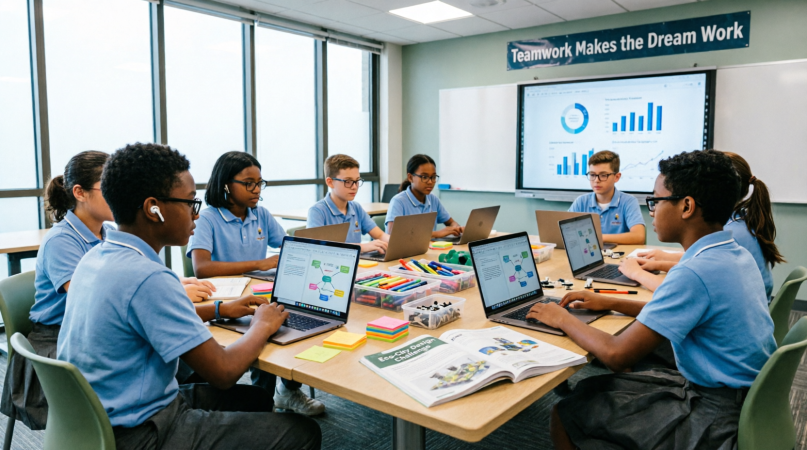
For over a century, traditional education has followed a familiar pattern: teachers deliver information through lectures, students memorize facts for tests, and success is measured by standardized assessments. While this model has produced educated citizens, it often fails to engage students or prepare them for the complex challenges they will face beyond the classroom. In response, educators worldwide are embracing project-based learning, an instructional approach that immerses students in meaningful, real-world projects requiring critical thinking, collaboration, and creative problem-solving. Research increasingly demonstrates that PBL not only improves academic achievement but also develops the essential skills students need to thrive in college, careers, and citizenship. As the demands of the modern workforce evolve, understanding and implementing project-based learning has become crucial for preparing students to succeed in an uncertain future.
Understanding Project-Based Learning
Project-based learning is not simply doing projects after teaching content; rather, it is teaching through projects where the project itself is the primary vehicle for instruction. In authentic PBL, students work on complex, meaningful problems or challenges over an extended period, often weeks or months. They investigate real-world questions, collaborate with peers, consult experts, create tangible products or presentations, and reflect on their learning process. Unlike traditional assignments where the path and outcome are predetermined, PBL embraces ambiguity and student agency. Learners make decisions about how to approach problems, what resources to use, and how to demonstrate their understanding. This shift from passive reception to active construction of knowledge fundamentally transforms the classroom dynamic, positioning students as investigators and creators rather than mere recipients of information.
The Research Behind PBL Effectiveness
Growing evidence supports the effectiveness of project-based learning across multiple dimensions. A comprehensive study by the University of Michigan found that students in PBL classrooms outperformed peers in traditional settings on standardized tests, particularly in mathematics and science. Research from Buck Institute for Education demonstrates that PBL improves long-term retention of content, as students remember what they learn when it is connected to meaningful application. Beyond test scores, studies show PBL enhances critical thinking skills, with students better able to analyze information, evaluate evidence, and synthesize ideas from multiple sources. The approach particularly benefits struggling students and English language learners, who show greater engagement and achievement when learning is contextualized and relevant. Additionally, longitudinal studies indicate that PBL students develop stronger collaboration and communication skills, report higher levels of school engagement, and are better prepared for college-level work requiring independent research and problem-solving.
Developing Essential Twenty-First Century Skills
Perhaps the most significant advantage of project-based learning is its capacity to develop skills that traditional instruction often neglects. The modern workforce demands what are known as four C skills: critical thinking, creativity, collaboration, and communication. PBL naturally cultivates these competencies through its structure. Students must think critically to solve authentic problems that have no single correct answer. They exercise creativity in designing solutions and creating products. Collaboration is essential as teams negotiate ideas, divide responsibilities, and resolve conflicts. Communication skills develop through presentations, written reports, and ongoing dialogue with peers and mentors. Additionally, PBL fosters adaptability, self-direction, and technological literacy as students navigate complex projects requiring research, iteration, and digital tools. These skills are increasingly valued by employers who report that recent graduates often lack the ability to work in teams, solve unstructured problems, or communicate effectively, despite possessing adequate technical knowledge.
Key Elements of Effective PBL
Not all projects constitute quality project-based learning. Research identifies several essential design elements that distinguish effective PBL. First, projects must center on significant, challenging problems or questions that are meaningful to students and connected to the real world. Second, sustained inquiry is crucial; students should engage in rigorous, extended investigation rather than superficial exploration. Third, authenticity matters; projects should connect to students' lives, communities, or genuine professional practices. Fourth, student voice and choice empower learners to make decisions about their work, increasing ownership and motivation. Fifth, reflection allows students to think metacognitively about what and how they are learning. Sixth, critique and revision teach students that quality work requires feedback and iteration. Finally, public product gives students purpose by sharing their work with audiences beyond the classroom. When these elements are present, projects transcend busywork to become powerful learning experiences that deepen understanding and build essential skills.
Implementation Challenges and Solutions
Despite its benefits, implementing project-based learning presents significant challenges. Teachers accustomed to traditional methods may struggle with the shift from content delivery to facilitation, requiring substantial professional development and ongoing support. Time constraints pose another obstacle; PBL units often require more time than traditional instruction, creating tension with curriculum coverage demands and standardized testing schedules. Assessment can be complex, as evaluating both content knowledge and skill development requires multiple measures beyond traditional tests. Resource limitations, including technology access and community partnerships, may hinder implementation in under-resourced schools. Additionally, students themselves may resist PBL initially, uncomfortable with the ambiguity and increased responsibility it demands. Successful implementation requires administrative support, collaborative planning time for teachers, phased rollout allowing for gradual skill development, and clear communication with stakeholders about the rationale and benefits of the approach. Schools that invest in comprehensive support systems report smoother transitions and more sustainable PBL programs.
PBL Across Subject Areas and Grade Levels
Project-based learning is not limited to specific subjects or age groups; it can be adapted across the curriculum and developmental levels. In science, students might investigate local environmental issues, collect data, and propose solutions to community leaders. Mathematics projects could involve designing budgets for real or hypothetical scenarios, analyzing statistical trends, or creating geometric art installations. Social studies lends itself naturally to PBL through historical investigations, civic action projects, or simulations of democratic processes. Even subjects like foreign language and literature benefit from project approaches, with students creating multimedia presentations, conducting interviews with native speakers, or producing original creative works. Elementary students can engage in age-appropriate projects exploring their community, natural phenomena, or cultural traditions, while high school students might tackle sophisticated challenges involving entrepreneurship, scientific research, or social advocacy. The key is scaffolding complexity appropriately while maintaining the core elements of authentic inquiry and meaningful application.
The Role of Technology in PBL
Technology serves as a powerful enabler of project-based learning, though it is not essential. Digital tools expand possibilities for research, allowing students to access primary sources, connect with experts worldwide, and gather real-time data. Collaboration platforms enable teams to work together synchronously and asynchronously, developing skills essential for modern remote work. Creation tools empower students to produce professional-quality products including videos, websites, podcasts, and digital presentations. Technology also facilitates differentiation, allowing students to access information at appropriate reading levels and demonstrate learning through varied modalities. However, effective PBL does not require extensive technology; many powerful projects use minimal digital tools, focusing instead on hands-on investigation, community engagement, and creative problem-solving. The key is using technology purposefully to enhance learning rather than as an end in itself, ensuring that digital tools serve pedagogical goals rather than driving them.
Conclusion
Project-based learning represents more than an instructional strategy; it is a reimagining of what education can be when students are positioned as active agents in their learning journey. By engaging with authentic problems, collaborating with peers, and creating meaningful products, students develop not only academic knowledge but also the critical thinking, creativity, and resilience needed to navigate an increasingly complex world. While implementing PBL requires significant shifts in practice, culture, and support systems, the evidence of its effectiveness continues to mount. As educators prepare students for futures we cannot fully predict, project-based learning offers a pathway to develop adaptable, engaged, and capable learners ready to contribute to their communities and careers. The question is not whether we can afford to implement PBL, but whether we can afford not to provide all students with learning experiences that truly prepare them for success beyond school walls.