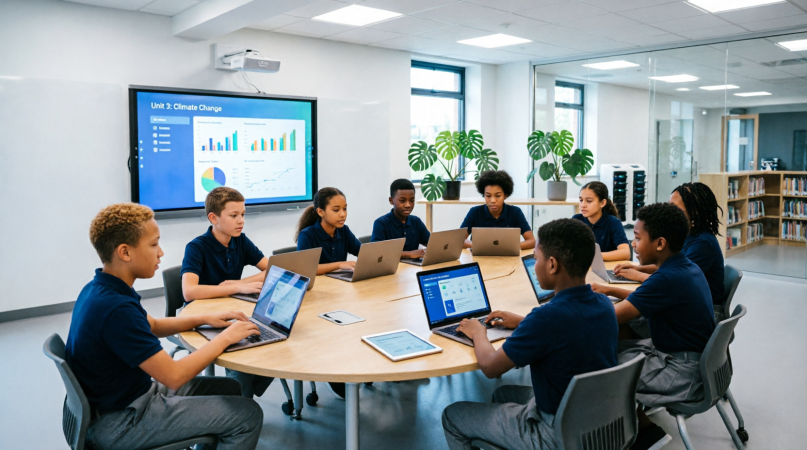
The rapid integration of digital technology into education has fundamentally transformed how students learn, teachers instruct, and schools operate. From interactive whiteboards to learning management systems, from artificial intelligence tutors to virtual reality field trips, technology promises to make education more engaging, personalized, and accessible. However, this digital revolution has also exposed and exacerbated deep inequalities in our education system. The digital divide, once simply about who had access to computers and internet connectivity, has evolved into a complex multidimensional gap that separates students not just by whether they have devices, but by the quality of their digital access, their digital literacy skills, and the support systems available to them. As education becomes increasingly digitized, understanding and addressing this divide has become one of the most pressing challenges facing educators, policymakers, and society at large.
The Evolution of the Digital Divide
Historically, the digital divide referred to the gap between those who had access to computers and the internet and those who did not. In the nineteen nineties and early two thousands, this was primarily an issue of infrastructure and affordability. Today, while basic access remains a critical issue for millions of students worldwide, the divide has become more nuanced. Researchers now identify three levels of digital inequality. The first level concerns physical access to devices and connectivity. The second level involves digital skills and literacy, the ability to effectively use technology for learning and problem-solving. The third level relates to outcomes, meaning whether technology use actually translates into educational benefits and opportunities. Students from disadvantaged backgrounds often face barriers at all three levels, creating a compounding effect that widens achievement gaps.
Access Inequality in the Modern Era
Despite significant progress in expanding internet connectivity, millions of students still lack adequate access to technology at home. Recent studies estimate that approximately fifteen million students in the United States alone live in households without reliable high-speed internet. This number increases dramatically in rural areas and low-income urban communities. The problem extends beyond mere connectivity to include device quality and availability. Many students share a single device among multiple family members, rely on outdated or malfunctioning equipment, or have access only to smartphones rather than computers suitable for complex academic work. The COVID nineteen pandemic starkly revealed these disparities when schools shifted to remote learning, leaving students without adequate technology unable to participate fully in education. This homework gap, where students cannot complete assignments requiring internet access, has profound implications for academic achievement and future opportunities.
The Skills Gap and Digital Literacy
Even when students have access to technology, significant differences exist in their ability to use it effectively for learning. Digital literacy encompasses far more than basic computer skills. It includes the ability to find, evaluate, and create information using digital technologies, to communicate and collaborate online, to solve problems using digital tools, and to navigate digital environments safely and ethically. Students from more affluent backgrounds often receive more guidance and support in developing these skills, both at school and at home. They are more likely to have parents with strong digital skills who can help them leverage technology for learning rather than just entertainment. Teachers in well-resourced schools receive better training in integrating technology meaningfully into instruction. Meanwhile, students in under-resourced schools may have devices but lack teachers trained to use them effectively, resulting in technology that sits unused or is employed only for low-level tasks like digital worksheets.
Impact on Learning Outcomes
The educational consequences of the digital divide are measurable and significant. Research consistently shows that students with inadequate access to technology score lower on standardized tests, have lower grade point averages, and are less likely to complete homework assignments. The divide affects not just academic performance but also the development of crucial twenty-first century skills like critical thinking, collaboration, and creativity. Students who cannot effectively use digital tools are at a disadvantage in developing the technological fluency that colleges and employers increasingly demand. Furthermore, the rise of adaptive learning platforms and personalized education technology means that students with better access benefit from instruction tailored to their individual needs and pace, while those without such access receive more standardized, one-size-fits-all education. This creates a feedback loop where advantaged students accelerate while disadvantaged students fall further behind.
The Role of Schools and Policy
Addressing the digital divide requires coordinated action at multiple levels. Schools play a crucial role by providing devices and internet access to students who lack them at home. Many districts have implemented one-to-one device programs, ensuring every student has a laptop or tablet. Some have gone further, providing mobile hotspots or partnering with internet service providers to offer low-cost connectivity to low-income families. However, device distribution alone is insufficient. Schools must also invest in teacher professional development, technical support, and digital curriculum resources. At the policy level, governments must prioritize broadband infrastructure development, particularly in underserved areas, and ensure that education funding formulas account for technology needs. The Federal Communications Commission's E-rate program in the United States, which provides discounts to schools and libraries for telecommunications services, represents one effort to address these issues, but advocates argue that much more investment is needed.
Innovative Solutions and Community Initiatives
Beyond government and school district efforts, innovative grassroots initiatives are emerging to bridge the digital divide. Some communities have converted retired school buses into mobile Wi-Fi hotspots, parking them in neighborhoods where students lack internet access. Libraries have extended hours and loaned out hotspots and devices. Nonprofit organizations partner with technology companies to refurbish and distribute used computers to low-income families. Some school districts have adopted offline-capable learning platforms that allow students to download assignments when they have connectivity and complete them offline. Public-private partnerships are expanding, with technology companies donating devices, software, and expertise to underserved schools. These creative solutions demonstrate that while the challenge is significant, communities are finding ways to ensure all students can participate in digital learning.
Preparing for the Future
As artificial intelligence, virtual reality, and other emerging technologies begin to transform education, the risk of widening the digital divide grows. Schools must not only provide current technology but also prepare students for a future where technological change accelerates. This requires teaching adaptability, continuous learning, and digital citizenship alongside technical skills. It means ensuring that technology integration promotes equity rather than exacerbating inequality. Educators must be intentional about using technology to empower all learners, particularly those from marginalized communities. This includes selecting culturally responsive digital content, designing universal learning experiences that accommodate diverse needs, and actively working to prevent algorithmic bias in educational technology. The goal must be not just equal access to devices, but equitable opportunities to thrive in an increasingly digital world.
Conclusion
The digital divide represents one of the defining educational challenges of our time. While technology holds tremendous promise to enhance learning and expand opportunities, it also risks deepening existing inequalities if access and support are not equitably distributed. Closing the divide requires sustained commitment, significant investment, and innovative thinking from educators, policymakers, communities, and the technology sector. It demands that we view digital access not as a luxury but as a fundamental educational necessity, as essential as textbooks, qualified teachers, and safe school buildings. Most importantly, it requires recognizing that every student, regardless of background or circumstance, deserves the opportunity to develop the digital skills and literacy needed to succeed in the twenty-first century. Only by addressing the digital divide can we hope to create an education system that truly serves all learners and prepares them for the future that awaits.